

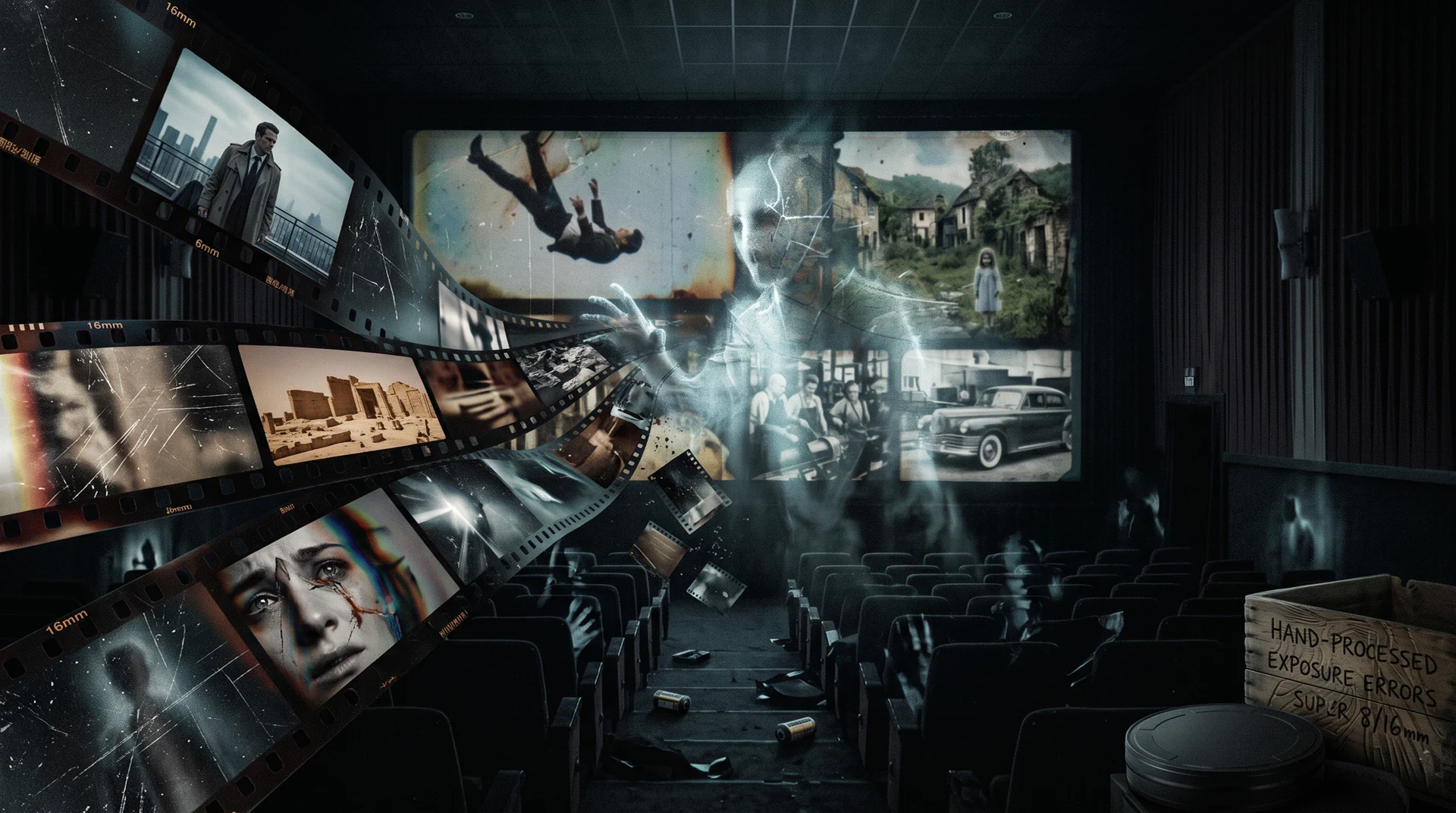
How Film Develops Memory: 16mm, 8mm, and the Ghost of the Image
As digital images become lighter and more frictionless, celluloid feels heavier than ever. It wears, fades, disappears, breaks, and yet precisely for that reason it preserves what time truly leaves behind: grain, scratches, exposure errors, the traces of hand processing, and the parts of memory that can never be fully recovered. This program brings together works made on 16mm, 8mm, Super 8mm, and film prints to explore how image materials actively shape memory—through formation, distortion, and loss. Here we find falling bodies, abandoned cities, conflicts between faith and desire, forgotten villages, blank film rolls, post-earthquake trauma, ruins haunted by ghosts, and historical footage recolored by time. Film is no longer merely a recording device; it becomes a way of sensing the world, preserving trauma, and calling back ghosts.


