


Bamboo
XIAO Hu • 2026
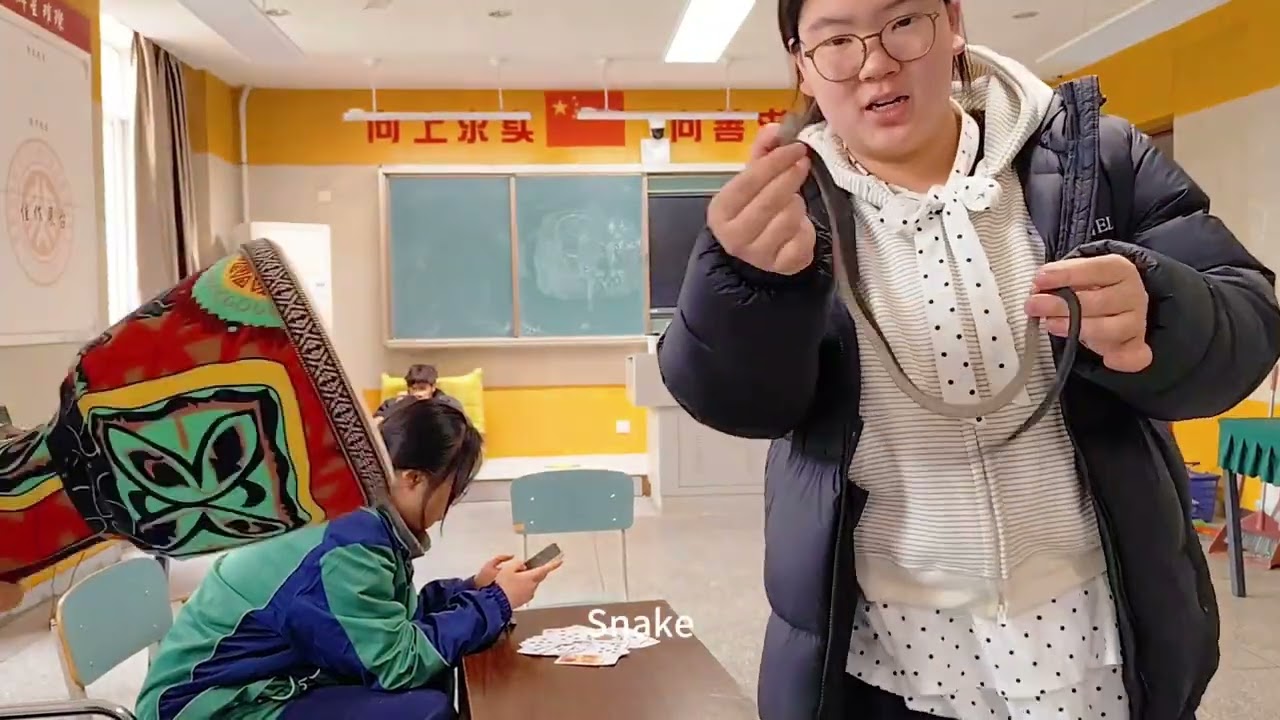
At Zhuzi School, Liu Feng, homeroom teacher of Grade 1 Class 6, and parent Mu Ren develop a learning system beyond the “Hengshui Model,” focusing on students’ body, mind, and brain. Opposing exhausting competition and utilitarian education, they advocate respect and space for healthier, more balanced high school development.
CAST & CREW
DIRECTOR'S STATEMENT

XIAO Hu
Director
In Chengdu, Sichuan, at a private school renamed “Bamboo School,” Liu Feng, the homeroom teacher of Class 6 (Arts and Sports Class) in Grade 11, and Mu Ren, a parent, are quietly pushing forward a profound educational experiment. Faced with the long-standing shadow of the “Hengshui Model”—a learning culture characterized by time accumulation, mechanical repetition, and intense competition—that has shrouded high school students, he has chosen a different path: no longer viewing students as treadmills on a test-oriented track, but like bamboo, focusing on their internal rhythms and long-term growth. He firmly believes that the underlying logic of education is returning to its essence in the AI era—learning itself. Therefore, the teaching logic will shift from the traditional “teaching-oriented” to “learning-oriented,” allowing all resources and tools to truly serve the students’ “learning,” transforming the classroom from a lecture hall for teachers into a place for students’ independent exploration. Liu Feng and Mu Ren divided the arts and sports students into three personalized tracks, each attempting to break free from the singular logic of “grades-only”: Track 1 students combine AI to refine their learning abilities, mastering how to learn, because self-study is a standard feature of top students, and self-study combined with AI is the pinnacle of this era; Track 2 students continue traditional teaching, but the focus shifts from knowledge transmission to stimulating thinking; Track 3 students focus on building self-motivation, rediscovering the curiosity and warmth of learning itself through projects and exploration. This classification is not stratification, but rather a respect for different growth paces, allowing education to return to “nurturing people” rather than “cultivating grades.”
TRAILER
FILM STILLS


USER REVIEWS
Loading reviews...