


Dance on the square
KANG Shiwei • 2018
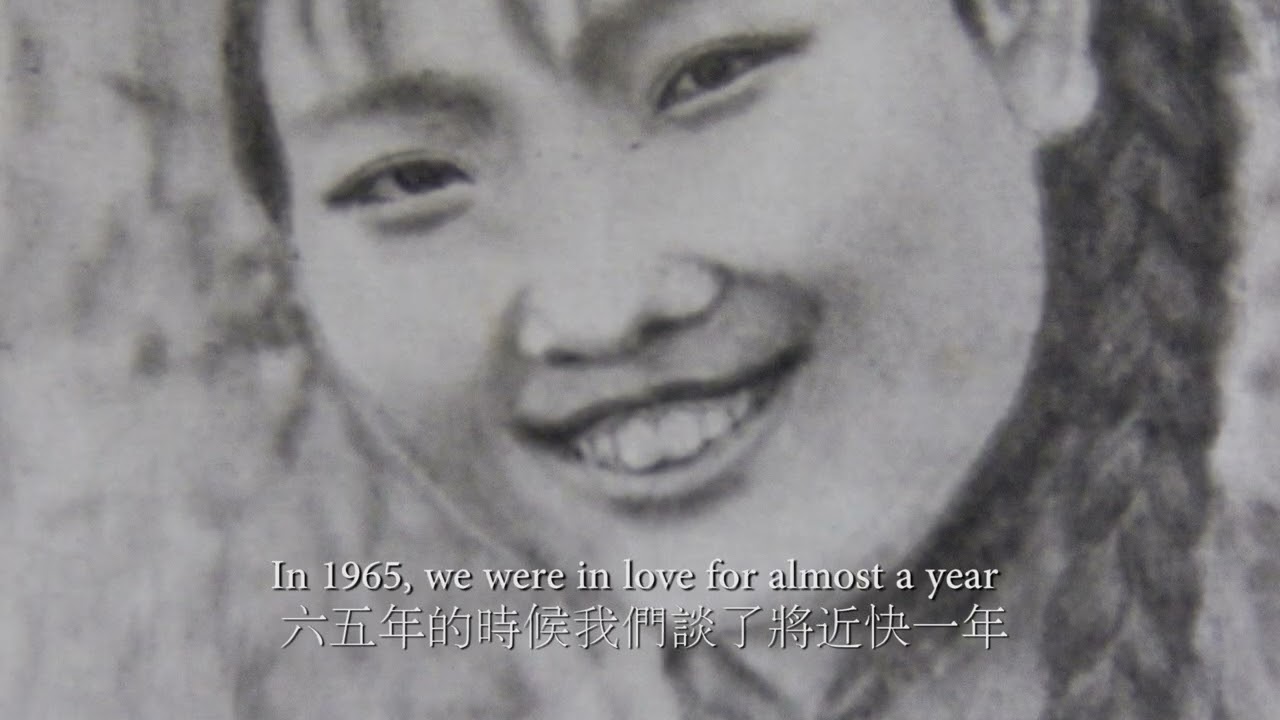
Tracing square dancing's roots to the Cultural Revolution's Loyalty Dance, the film follows three seniors across half a century—Mr. Zhou reuniting with his first love, Mr. Xiong finding solace while caring for his father, and Ms. Yin reflecting on her past and fulfilling her dream in Los Angeles—witnessing China's transformation through dance.
受賞・映画祭
Best Director Award
Chinese Music Ethnography Film Festival
China
2023
キャスト・スタッフ
監督ステートメント

KANG Shiwei
監督
The film chronicles the evolution of square dancing in Chinese society from the Cultural Revolution to the present day, tracing the popular contemporary square dance back to its origins in the “Loyalty Dance” of the Cultural Revolution era. Three central characters are featured: Mr. Zhou, who dared to resist during the Cultural Revolution and can still do a handstand at age 74, remains sentimental in his old age, tracking down his first love from fifty years ago and presenting her with the portrait he drew of her when they parted; Mr. Xiong, whose marriage is on the verge of collapse and who cares daily for his 105-year-old father—at 70, he not only dances the “Hand-in-Hand Dance” in the square every day but also constantly changes female dance partners in search of superficial sexual stimulation to relieve the psychological pressure of caregiving, before finally bidding a quiet farewell to his father; and Ms. Yin, 63, a former Red Guard regiment commander, who moves from her initial far-left zeal during the Cultural Revolution to tearful reflection and regret over her youthful naivety, and through persistent effort ultimately fulfills her lifelong dream by performing in Los Angeles, USA. All three danced the Loyalty Dance during the Cultural Revolution and are亲身 participants in today’s square dancing. Today, they strive once more to realize their final dreams. The film connects them through square dancing, using the transformation of dance in the public square as a beautiful microcosm of nearly fifty years of historical change in China. The documentary’s theme is to elucidate, through the form of dance and across fifty years of time and space, the impact of dramatic political transformation on the spiritual world of the Chinese people. Its significance lies in following the same protagonists across a narrative spanning half a century, using art to imply the metamorphosis of Chinese society. In mainland China, it is rare for anyone to persist in one endeavor for fifty years; traversing such an extended period reflects a grand social backdrop, imbued with dramatic intensity and a cruel political context. Our team of more than ten members conducted extensive preliminary fieldwork in public squares over three years, identifying more than twenty potential subjects and stories, from which we ultimately selected the three most dramatically compelling individuals, each with an irreplicable story. Take Ms. Yin, for example: her father died of cancer, a illness brought on by years of depression after being persecuted during the Cultural Revolution; a few years later, she became a Red Guard regiment commander and felt proud of it. She had loved dance since childhood but was too short and overweight to join any formal dance troupe. In her later years, she began to reflect on her youthful ideology and ultimately attained enlightenment—and yet this very awakening unexpectedly led her to perform dance in the United States. A story like hers is virtually unprecedented in China. The Cultural Revolution in China lasted from 1966 to 1976. During that period, a form of political propaganda known as the “Loyalty Dance” was performed in public squares to express devotion to Chairman Mao. Led by the Red Guards and participated in by the masses, it carried a strong political character. Though it was, in truth, an aesthetically impoverished form of artistic expression, most people danced the Loyalty Dance during the Cultural Revolution to demonstrate their love for the leader, driven by political pressure. Most participants were between the ages of 15 and 25 at the time; fifty years later, they are still dancing in the squares. What remains from that era in the form of square dancing has now become a trend sweeping across China and even the world. In nearly every city and township in China, more than half of the elderly population participates in square dancing. Indeed, wherever there are Chinese communities abroad, one can almost always see elderly Chinese occupying public squares and dancing. Jokingly, it has even become a postmodern art form that dissolves the political nature of the square—yet its origin lies in the Loyalty Dance movement of fifty years ago, which swept across China during the Cultural Revolution as an expression of leader worship.
予告編
スチール写真


USER REVIEWS
Loading reviews...