


AlieNation
WANG Jiayin • 2026
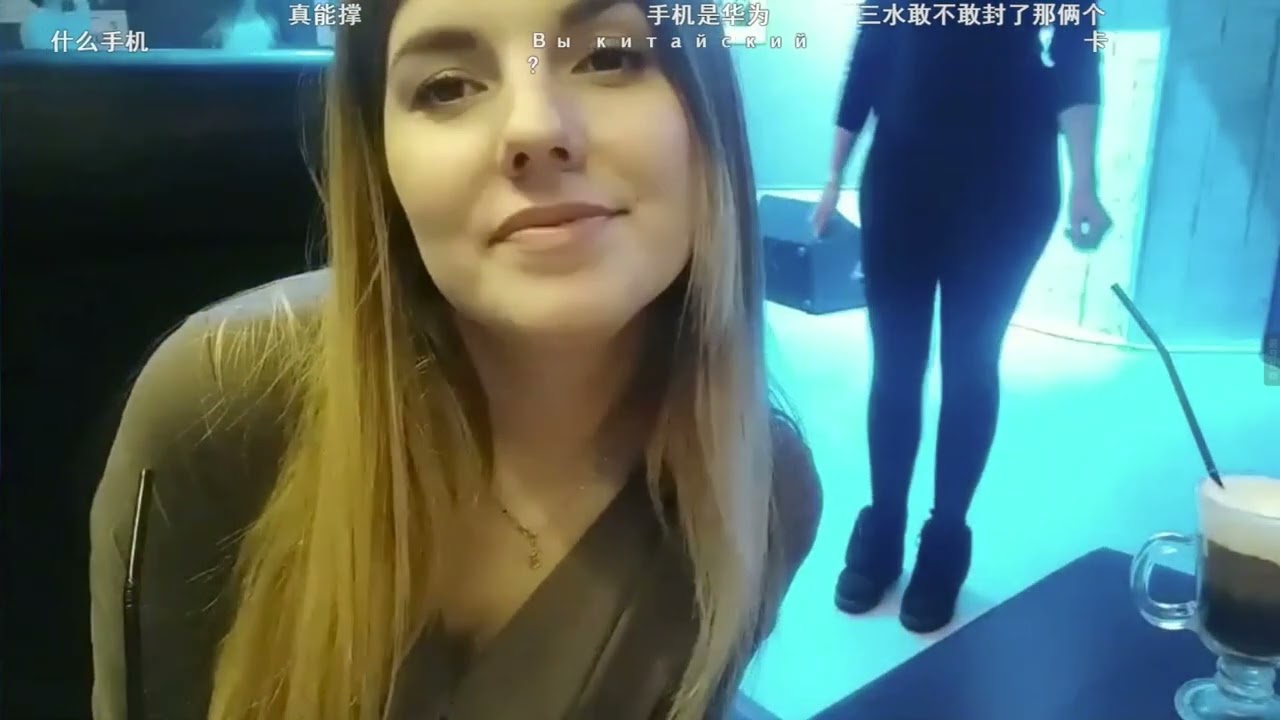
Mario, a barber in Turin, Ming, a small businessman in Russia, and Shahe, recently released from prison in Beijing, live vastly different lives yet share one identity: livestream hosts. Over five years, the film assembles their broadcasts to examine alienation in online-mediated existence through an entirely screen-captured form.
수상 및 영화제
Sheffield DocFest Award
CNEX Chinese Documentary Forum
China
2017
Documentaries Without Borders International Film Festival
United States
2023
출연진 및 제작진
감독의 말

WANG Jiayin
감독
At some point, our way of life began to change quietly and imperceptibly. Today, in the age of the internet, when we are separated from our computers, smartphones, or any of the various devices that connect us to the online world, we feel like passengers thrown off a rapidly advancing train, suddenly cut off from the world, left somewhat lost and disoriented. It is similar to the sense of helplessness one might feel in an industrial society if electricity were suddenly to disappear from daily life.As a new phenomenon in the internet world, livestreaming experienced explosive growth in 2016, especially in China. People began livestreaming in great numbers, and the number of viewers watching these broadcasts became almost impossible to count. One can imagine that, in the not-too-distant future, the popularity of livestreaming may lead to scenes like this: in certain public spaces, alongside “No Smoking” signs, there may also appear warnings that say “No Livestreaming.”In 2016, a childhood friend of mine, who is also a musician, began livestreaming his musical talent. I had not seen this friend in real life for many years. When I heard the news, I immediately found his room online and watched his livestream. The version of him I saw online felt somewhat unfamiliar compared with the person I had known in reality. Of course, I could understand that certain behaviors he displayed during the livestream were intended to attract more gifts and tips, but this sense of unfamiliarity went far beyond that. Perhaps a long period of living through livestreaming had gradually accustomed him to a particular state, such as a performative personality, and that state was indeed different from the condition of ordinary real life.After that, I began paying attention to all kinds of livestreams online. My focus gradually shifted from food, talent shows, games, and other forms of content to people who livestreamed their own everyday lives. Over time, this attention accumulated and moved beyond its initial element of curiosity or spectacle, becoming instead an observation and understanding of a mediated mode of existence shaped by the internet. After browsing through nearly all of China’s livestreaming platforms and thousands of streamers who maintained a certain degree of regularity in their broadcasts, I gradually narrowed the scope of my observation and finally selected several representative streamers for sustained observation and recording.From the perspective of the streamers themselves, within an increasingly flattened global village, some of the individuals we captured were followed almost from the moment they first began livestreaming. More than half a year has now passed. No matter where they are located, whether in Italy, Russia, Uganda, China, or elsewhere, and no matter how different their lives may be, changes from their initial state of livestreaming have already begun to appear. The impact that this prolonged mediated existence on the internet has had on these individuals has become increasingly evident. To some extent, this is a gradual process of alienation. From the perspective of livestream viewers, the act of sending bullet comments makes interactivity possible on livestreaming platforms. In every livestream room, we can see viewers making all kinds of demands of the streamer and expressing their feelings about the streamer’s actions. Sometimes these comments may simply be forms of pure venting. Yet these seemingly insignificant bullet comments are precisely what become a reflection and miniature of some of the most authentic thoughts, behaviors, and even ideologies within Chinese society, or more specifically, within China’s online society.
예고편
스틸 사진


USER REVIEWS
Loading reviews...